The drama of a stock market crash is a familiar chorus in financial history, a moment when the world seems to look up from the daily routine of price charts and suddenly asks a broader question about risk, uncertainty, and the resilience of the real economy. A crash is not a single event that can be neatly boxed into a calendar day, but rather a complex sequence that often unfolds through a fragile interaction of market psychology, leverage, liquidity, and external shocks. To understand why crashes happen, it helps to consider not only the mech...
Stock Market & Trading
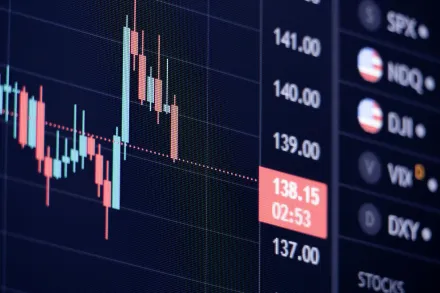
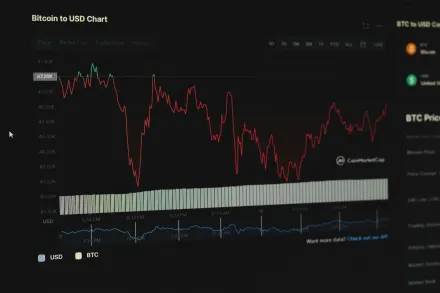
The Relative Strength Index, commonly known as RSI, is one of the most recognizable momentum oscillators in financial markets. Developed by J. Welles Wilder Jr. for use on price charts, it measures the speed and change of price movements over a defined window. RSI values oscillate between zero and one hundred, creating a framework that traders interpret as zones of overbought and oversold conditions, while also signaling potential divergences and momentum shifts. Its appeal lies in its relative simplicity and its ability to adapt across assets ...
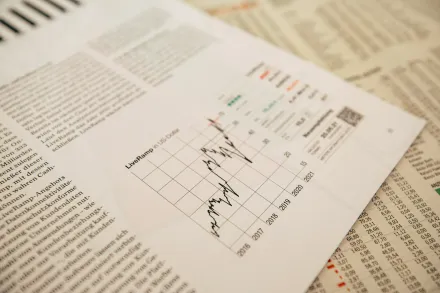
Elections are not only political events; they are market events because they reshape the incentives that drive corporate behavior, borrowing, investment, and the allocation of capital across industries. When voters head to the polls, financial markets absorb signals about the likely direction of taxes, spending, regulation, and trade policy. Investors translate these signals into expectations for future cash flows, risk premiums, and ultimately stock prices. This dynamic creates a pattern that repeats across time and geography, yet with importa...

Behavioral finance examines how real human beings make money decisions in the complex environment of financial markets, where information arrives in noisy bursts, emotions run high, and the pressure of quickly unfolding events can distort judgment. Unlike classical theories that assume fully rational actors who optimize for expected utility, behavioral finance accepts that traders bring cognitive shortcuts, memories, and beliefs to the bargaining table. These elements shape how people interpret news, evaluate risk, and decide when to buy or sel...

In the world of investing, managing risk is as important as seeking return, and protective put strategy explains a straightforward way to guard downside while still holding onto growth potential. The idea revolves around pairing ownership of a security with a put option that acts like an insurance policy. When markets retreat or when a stock produces unpredictable news, the protective put helps preserve capital by providing a predefined level of protection. This blend of asset ownership and options-based hedging appeals to investors who want to...

Green energy stocks represent ownership in companies that are directly involved in creating or enabling cleaner energy solutions. They span a broad tapestry of industries, from developers who install and operate solar farms to manufacturers of components for wind turbines, and from software platforms that optimize energy use to utilities that are transforming generation mixes toward greater renewable shares. The common thread is a strategic focus on reducing emissions and increasing efficiency, often supported by policy shifts, technological br...
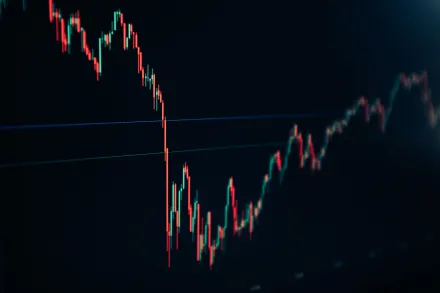
Algorithmic trading stands at the intersection of finance, mathematics, and computer science, where decisions about buying and selling assets are driven by automated rules rather than human impulses. At its core, it seeks to convert well defined trading ideas into executable programs that can monitor markets, compute signals, and place orders with speed and precision that surpasses human capabilities. The resulting activity covers a broad spectrum of styles and strategies, from the rapid, high volume execution of liquid assets to more nuanced, ...
Capital gains taxes are a fundamental part of how investors realize profits from selling assets. The distinction between short-term and long-term gains shapes decisions about when to buy, hold, or sell financial instruments, real estate, or other investments. The conceptual difference is straightforward: short-term gains arise when an asset is held for a brief period, typically under a defined holding period, and the gains are taxed as ordinary income at the taxpayer's marginal rate. Long-term gains arise when an asset is held longer than that ...

Trend lines are simple yet powerful tools used by traders, investors, and analysts to visualize the general direction of prices over a period of time. They are drawn by connecting successive price extrema on a chart, typically using the highs in a downtrend or the lows in an uptrend, and sometimes by linking pivotal turning points that seem to define a path through the noise of day to day fluctuations. The fundamental idea is that prices do not move in a perfectly random fashion but tend to exhibit a directional bias that can be exploited for e...
In the wake of a decision to cut the policy rate, the immediate mechanism is through the banking system and the broader credit market. When the central bank lowers the official rate, banks' funding costs often decline, which can enable them to lend more cheaply to households and businesses. This reduction in borrowing costs tends to stimulate demand by making mortgages, auto loans, and business credit more affordable, and that boost in spending then feeds through to corporate earnings and investor expectations. Yet the actual effect on stocks i...