The history of financial markets is written with episodes of exuberant highs followed by abrupt and painful reversals. Some of the most consequential moments arrived not as isolated skirmishes but as cascading events that redefined economies, shaped policy, and altered the trajectory of everyday life. The crashes discussed here did not merely erase a few points on a chart; they reoriented confidence, exposed weaknesses in financial systems, and forced societies to confront abrupt shifts in risk, liquidity, and expectations. In exploring these e...
Stock Market & Trading


The wash sale rule is a fundamental element of tax law that governs how investors report losses on securities when they quickly reverse a position. In essence, it prevents a taxpayer from claiming a tax deduction for a loss on the sale of stock or another security if within a short window they repurchase the same or a substantially identical asset. The practical effect is that the economic position has not meaningfully left the market, so the tax code postpones the deduction rather than allowing an immediate write‑off. This rule is important fo...
Sustainable investing represents a broad philosophy in which investment decisions are informed not only by traditional financial metrics but also by a consideration of environmental, social, and governance factors that can influence a company’s long term viability. It involves recognizing that a company's choices about energy use, emissions, labor practices, supply chain integrity, corporate culture, board structure, and accountability mechanisms can affect its risk profile and its ability to create durable value for shareholders. Rather than t...
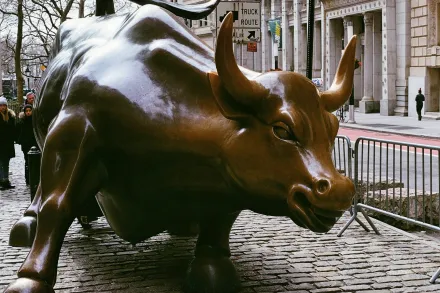
Understanding how consumer confidence shapes stock markets requires tracing a path from sentiment to behavior to company results and finally to prices. Consumer confidence measures capture households' perceptions of current conditions and expectations for the future, and those perceptions influence how households choose to spend, save, or borrow. When confidence is high, households are more likely to open wallets for big-ticket purchases such as cars, appliances, and vacations, and they may be more inclined to finance purchases with credit if c...

In financial markets, the premium that an option commands is the price a buyer is willing to pay and that a seller is willing to accept for a contract that grants a chosen set of rights regarding an underlying asset. This premium is not a single static figure but a dynamic measure that reflects the likelihood of profitable exercise, the time remaining until expiration, and the costs associated with maintaining the position. At its core, the premium can be thought of as the sum of intrinsic value and time value, yet the exact composition shifts ...

Options trading introduces a versatile set of tools that empower investors to manage risk, express directional views, and enhance portfolio outcomes without committing large chunks of capital or taking on the full exposure of owning or shorting a stock. For someone new to the world of options, the landscape may appear complex, yet beneath the surface lie a few fundamental ideas that recur across many strategies. The core concepts involve understanding what a call and a put represent, how the strike price interacts with the current price of the ...

In a world saturated with rapid trades and headlines promising overnight fortunes, the quiet discipline of long-term investing often serves as the steady engine behind durable wealth. The core idea is deceptively simple: lock in a plan that spans years and decades, let compounding do the heavy lifting, and adjust gradually as life and markets unfold without surrendering to fear or greed. This approach does not promise instant riches, yet it offers a robust pathway to growth that can outpace inflation, create security, and unlock future possibil...

Market capitalization is a fundamental concept in finance that serves as a quick and widely used gauge of a company’s size as perceived by the public equity markets. It represents the value that investors currently assign to all outstanding shares of a company by taking the prevailing market price per share and multiplying it by the total number of shares that are issued and held by the public and other stakeholders. This simple arithmetic produces a single figure that, despite its simplicity, becomes a powerful reference point for comparing co...

Overtrading is a behavior that plagues many participants in dynamic markets, where the pull to be involved in every price movement outweighs the discipline to wait for high quality setups. It often arises from a blend of impatience, fear of missing out, and a misguided belief that more activity will naturally lead to more profits. In real life trading, this impulse typically manifests as taking too many positions, chasing markets after they have already moved, or entering trades without sufficient analysis or a clearly defined edge. The consequ...

Hidden fees in stock trading are costs that erode returns but are not immediately visible as line items on a simple price quote. They hide in the mechanics of how trades are executed, how accounts are maintained, and how data and access are priced by brokers and exchanges. To a casual investor, a trade might seem to cost a clean, fixed amount, yet the actual economic picture frequently includes costs that are embedded in the bid-ask spread, in the price paid for data feeds, or in the way a broker routes an order to a market maker. These costs a...